

Your receptionist is forwarding calls to a mobile. Your office line still runs through an old handset at the front desk. When someone steps out for lunch, messages pile up. A client calls twice, gets voicemail both times, and moves on to the next firm.
That's the moment many Ottawa and Gatineau owners realise a phone line for business isn't just a utility. It affects how quickly you answer, how professionally you route calls, how securely you handle client information, and how well you hold up when weather or internet problems hit the region.
The upgrade usually starts with a simple question. Do you keep a traditional line, move to VoIP, or combine both? In this market, the answer depends less on sales language and more on your building, your internet resilience, your compliance obligations, and whether your team works only in one office or across devices and locations.
Table of Contents
- Is Your Phone System Holding Your Business Back
- Decoding Your Business Phone Line Options
- VoIP vs Traditional Lines A Head-to-Head Comparison
- Ensuring Call Reliability and Business Continuity
- Navigating Compliance for Regulated Industries
- How to Choose a Provider in the Ottawa-Gatineau Region
- Why a Managed Telecom Partner Is Your Best Investment
Is Your Phone System Holding Your Business Back
A lot of small businesses wait too long to replace an outdated phone setup because the old one still “works.” Calls come in. The voicemail light flashes. The line rings. But the problems show up around the edges first. Missed after-hours enquiries. No easy way to transfer a call to someone working from home. No call routing for bilingual service. No clean record of who called and when.
That's common in Ottawa-Gatineau, especially for firms that started with a basic analog line and then layered mobile phones on top as they grew. The result is a patchwork. One number on the website, another in email signatures, and a front desk process held together by sticky notes and memory.
By 2023, traditional copper phone line subscriptions among small and mid-sized businesses in the Ottawa–Gatineau region had declined by 63% since 2010, as businesses moved to cloud-based VoIP platforms for cost savings and scalability, according to IBISWorld's Ontario telecom industry coverage. That shift happened for a reason. Older systems make growth awkward.
The hidden cost of “good enough”
A dated phone line for business usually creates four practical issues:
- Calls depend on one place: If the desk phone doesn't get answered, the call often dies there.
- Staff improvise with personal mobiles: That helps short term, but it blurs business and personal communication.
- Customer experience feels inconsistent: Some callers get a live answer. Others get an old greeting or no clear next step.
- Changes require workarounds: Adding a user, extension, or second location becomes harder than it should be.
Practical rule: If your phone process depends on one person remembering who called, the system is already too fragile.
The phone system shouldn't slow down a clinic, law office, contractor, or service team. It should give customers one reliable number, route calls where they need to go, and keep working when your staff aren't all in the same room.
Decoding Your Business Phone Line Options
Most owners shopping for a phone line for business aren't confused by features. They're confused by terminology. Providers throw around VoIP, hosted PBX, SIP, virtual numbers, and trunks as if they all mean the same thing. They don't.
The simplest way to think about it is this. Some systems rely on an old physical line. Others use your internet connection and software to handle calls. The right option depends on whether you want simplicity, flexibility, or a way to keep existing hardware in play.
Traditional PSTN and analog lines
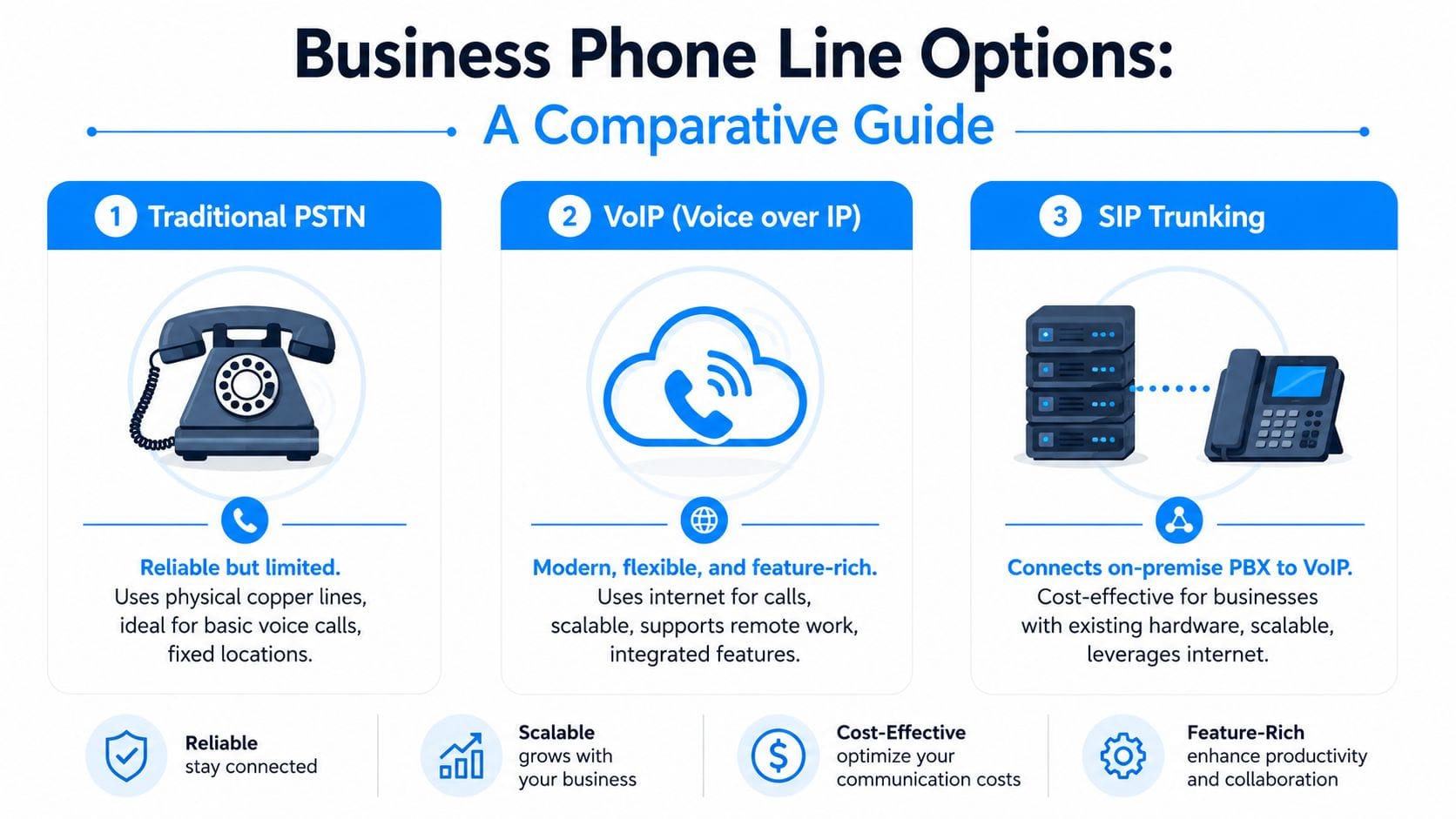
A traditional PSTN line is the classic business phone service built on copper infrastructure. Think of it as a dedicated pipe for voice. It's straightforward. You plug in a phone, get a dial tone, and make or receive calls from that fixed line.
This still suits some businesses with very basic needs, especially if they want a simple standalone line for one location. But it's limited. It doesn't adapt well to hybrid work, advanced routing, or multi-device use.
VoIP and hosted PBX
VoIP stands for Voice over Internet Protocol. Instead of sending your call through a dedicated copper line, it sends voice as data over your internet connection. In the Ottawa–Gatineau region, VoIP business phone systems can replace traditional copper phone lines by routing calls over the internet while supporting local numbers in over 200 Canadian cities including Ottawa and Gatineau, as described by OfficeSpaces on Ottawa virtual phone service.
For most small businesses, the most practical version is a hosted PBX. The provider runs the phone system in the cloud. You use desk phones, mobile apps, desktop apps, or all three. You don't need an on-site PBX cabinet in a closet, and you don't need to nurse aging telecom hardware along for another year.
SIP trunking and virtual numbers
SIP trunking is different from hosted PBX. It's usually for businesses that already have an on-premise PBX and want to connect that system to internet-based calling instead of paying for traditional line service. It's a bridge between existing equipment and modern calling.
A virtual number is the number layer. It isn't tied to one physical office line. Calls can ring on multiple users, different devices, or different locations based on rules you set.
Here's the practical comparison.
| Technology | How It Works | Best For | Key Benefit |
|---|---|---|---|
| Traditional PSTN | Uses physical copper phone lines for voice calls | Very basic single-site needs, backup use, legacy devices | Familiar and simple |
| VoIP | Sends calls over the internet through cloud-based phone platforms | Most modern SMBs, hybrid teams, growing firms | Flexible features and easy scaling |
| SIP Trunking | Connects an existing PBX to internet-based calling | Firms with PBX hardware they want to keep using | Modernises calling without replacing all equipment |
A phone system should match how your staff actually answer calls. Not how the building was wired fifteen years ago.
What works well in practice? Hosted VoIP for most offices. SIP trunking when a business has a good reason to retain PBX hardware. Analog only where there's a specific operational or redundancy reason.
What usually doesn't work? Keeping a legacy setup just because replacing it feels inconvenient.
VoIP vs Traditional Lines A Head-to-Head Comparison
The true comparison isn't old versus new. It's rigid versus adaptable. If your business is growing, moving offices, supporting hybrid staff, or handling customer calls across teams, VoIP usually solves operational problems that traditional lines can't.
Where traditional lines still make sense
Traditional lines still have a place when the requirement is narrow. A single emergency backup line. A legacy device that hasn't been replaced yet. A location where internet resilience is uncertain. In those cases, the line is there for continuity, not because it offers a better day-to-day business system.
What traditional service doesn't handle well is change. Adding users often means adding physical services or more hardware. Reworking call flow can be clumsy. If your team needs calls on laptops and mobiles, the old model starts fighting the way people work.
Where VoIP changes the day-to-day
VoIP wins on business practicality because it changes more than the dial tone.
- Cost structure: You avoid a lot of legacy line constraints and can build around users, devices, and features instead of fixed wiring.
- Scalability: Adding a new staff member, extension, or location is much easier than with line-bound systems.
- Features: Auto-attendants, ring groups, voicemail-to-email, business hours logic, and better call routing are normal parts of the platform.
- Mobility: A user can answer from a desk phone in Kanata, a laptop downtown, or a mobile in Gatineau without forcing callers to use a different number.
If you're also reviewing cabling, switching, and internet readiness, it helps to assess the phone system as part of your broader telecom infrastructure planning, not as a separate purchase.
A practical example makes the trade-off clearer. A professional services firm with one analog main line can answer calls only where that line terminates. A comparable hosted system can route new client calls to reception, send existing clients to the right extension group, and redirect after-hours calls based on actual staff availability. That isn't just a feature list. It changes response time and customer experience.
Field advice: If you need calls to follow people instead of desks, traditional lines stop being efficient very quickly.
For a modern Ottawa business, VoIP usually isn't a luxury upgrade. It's the format that fits how work is already being done.
Ensuring Call Reliability and Business Continuity
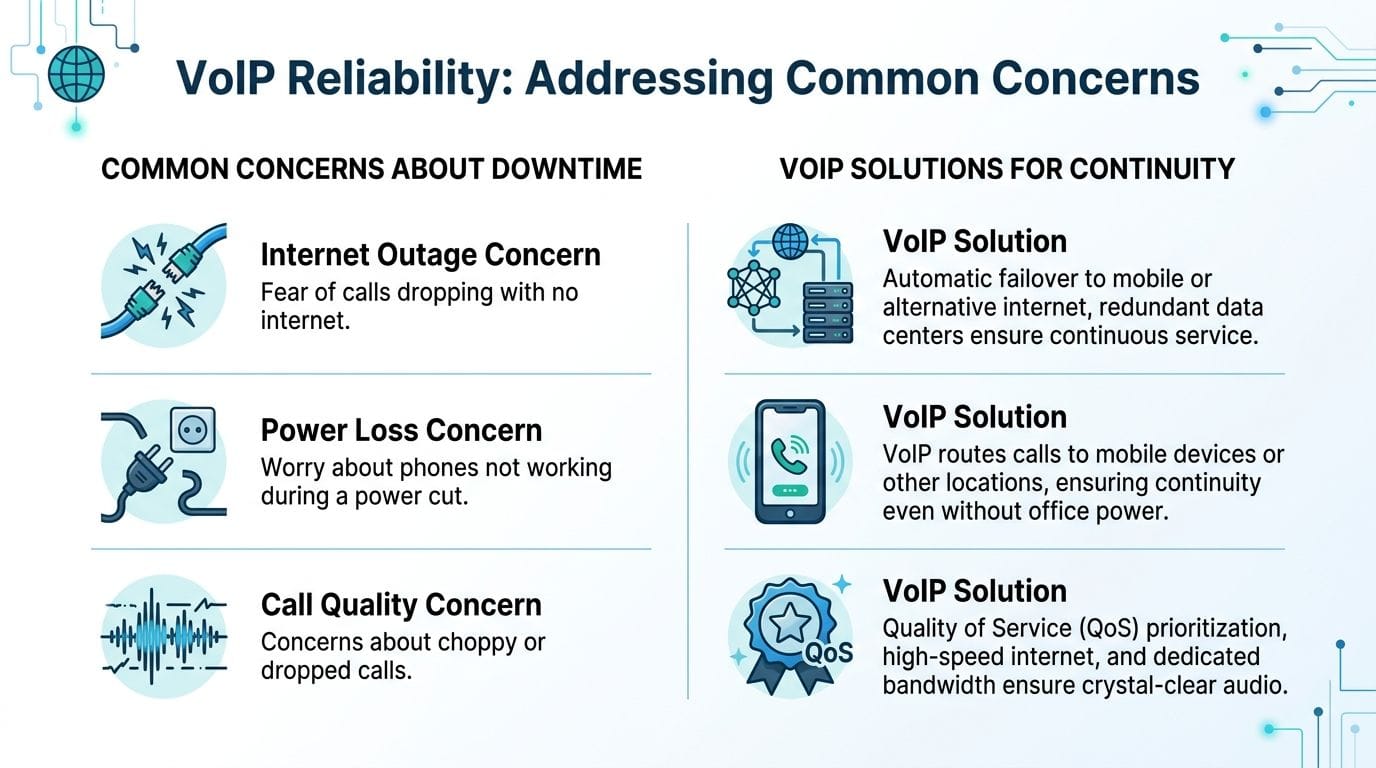
The first objection to VoIP is almost always the same. What happens if the internet goes down?
That's the right question. It's also where many generic phone articles give the wrong answer. They talk as if every business should abandon landlines completely. That's not always smart in Ottawa-Gatineau, especially when winter weather, mixed urban-rural coverage, and local building conditions affect connectivity.
The real question is not VoIP or landline
The better question is whether you need a hybrid setup.
For some businesses in rural and peri-urban Ontario, including mixed zones around Gatineau, 28% still require fixed-line redundancy due to inconsistent broadband resilience during winter storms, while Canada's settlement guidance notes landlines remain close to universal coverage even when mobile and internet service vary by region, as noted in the Government of Canada communications guide.
That matters. If your clinic, legal office, or service desk can't afford silence during an outage, a pure cloud answer may not be enough on its own.
What a reliable setup looks like in practice
A well-designed VoIP deployment doesn't rely on hope. It uses fallback paths.
- Call forwarding failover: If the office connection drops, inbound calls can route to mobiles or another location.
- Secondary connectivity: Some sites use a backup internet path for continuity.
- Power planning: If your phones, switches, or internet equipment lose power, the system needs a tested response.
- Selective analog backup: Keep one basic line where operations or compliance make that worthwhile.
In the Ottawa–Gatineau region, business VoIP lines using SIP trunking over fibre can achieve latency under 15ms and jitter below 1ms, supporting HD voice quality and reliability comparable to legacy phone lines, according to BaronTel's Ottawa business phone system specifications. So call quality itself usually isn't the problem. Weak planning is.
For firms that already take continuity seriously, voice should sit inside the same resilience planning as backups, recovery procedures, and alternate workflows. That's where broader online disaster recovery solutions become relevant. The phone system is one part of continuity, not a separate island.
If your backup plan for phones is “we'll use our cell phones,” that isn't a plan. It's an assumption.
What works in this region is clear. Use VoIP for flexibility and features. Add redundancy where your location or risk profile demands it. Don't buy a phone system based on ideal conditions if your business operates in real Canadian winters.
Navigating Compliance for Regulated Industries
A clinic in Ottawa can answer calls in Ontario, book patients from Gatineau, store voicemail in another province, and let staff check recordings from personal phones. That is a privacy and records-management issue, not just a phone feature choice.
Healthcare clinics, legal practices, financial firms, and social service organizations need to review how voice data is collected, stored, accessed, and deleted before they sign a telecom contract. Generic business phone articles often skip that part, which is a problem in the Ottawa-Gatineau market where Ontario and Quebec rules can both affect daily operations.
Why voice data gets overlooked
Owners usually start with the right operational questions. What will it cost, how hard is the cutover, and will staff use it? The compliance risk shows up later, usually around call recording, voicemail, mobile app access, call logs, and admin permissions.
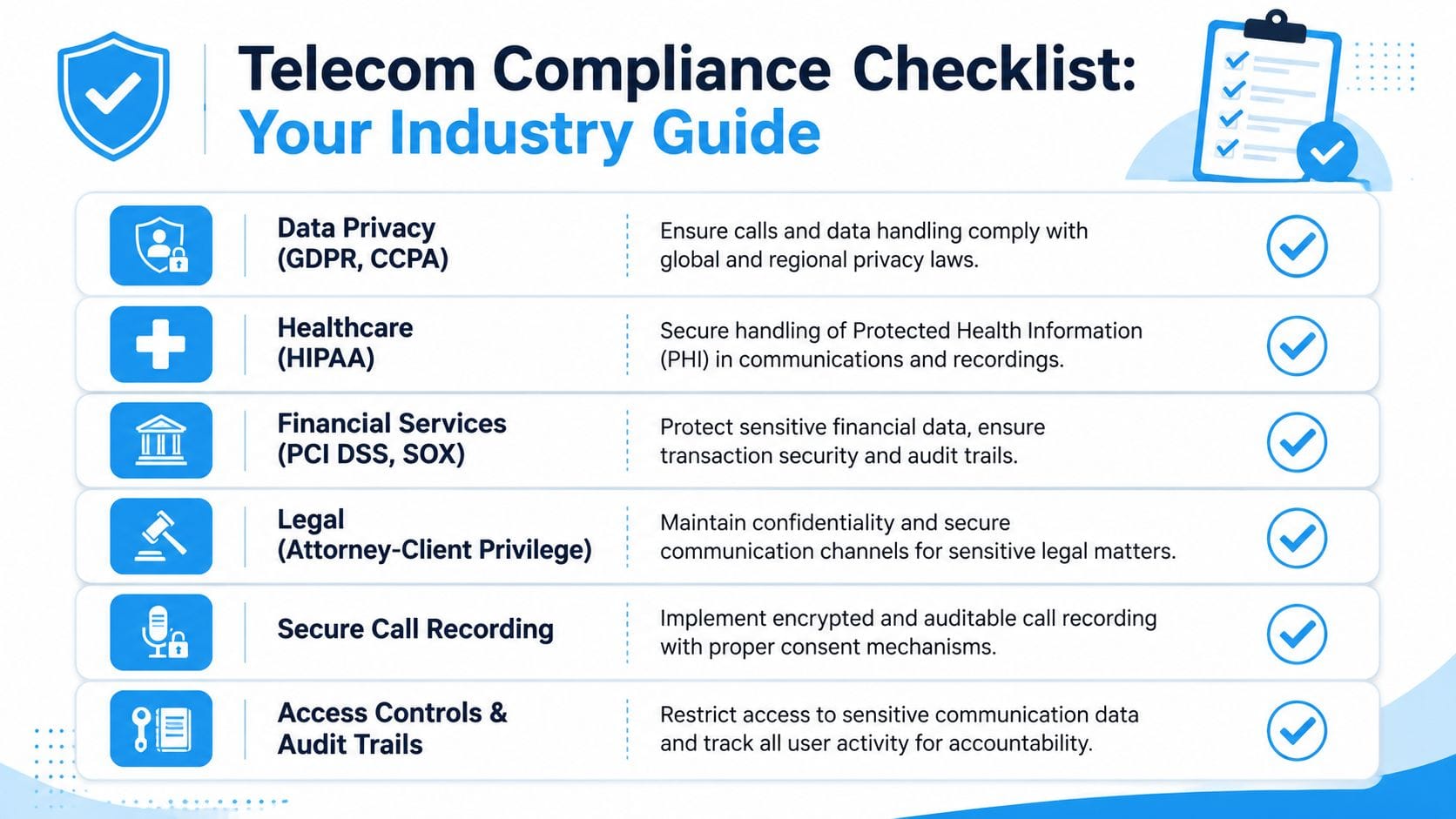
For Ottawa-Gatineau organizations, the rules can get more complicated fast. A medical clinic in Ontario has to handle personal health information in line with PHIPA. A business serving Quebec clients, or operating staff and systems across the river, also needs to account for Law 25 requirements around personal information, consent, access, and governance. If your phone provider offers recording, transcription, voicemail-to-email, or shared call history, those features need policy controls behind them.
Data location matters too. Providers often market "Canadian hosting" loosely. Ask what that means in practice. Which province stores recordings? Where are backups kept? Who can administer the system? If support staff outside Canada can access logs or recordings, that needs to be disclosed and reviewed by your legal or privacy lead.
What to verify before you sign
Do not accept "secure" or "compliant" as a complete answer. Ask the provider to show how the system is configured and how access is controlled.
- Encryption: Ask whether calls in transit, voicemail, recordings, and admin sessions are encrypted, and where that protection starts and ends.
- Audit logging: Confirm you can review who accessed recordings, exported data, changed call flows, or reset user permissions.
- Retention and deletion: Check how long recordings are kept, who sets retention rules, and how deletion requests are handled.
- Consent handling: If calls are recorded, confirm how the system supports notice, opt-out workflows where required, and internal recording policies.
- User access: Review role-based permissions carefully. Front-desk staff, managers, and external admins should not all see the same data.
- Data residency: Get a written answer on where live data and backups are stored, not a marketing summary.
I usually tell clients to test compliance with one simple question. If a privacy complaint lands on your desk next month, can your provider show who accessed the call record, where it was stored, and how long it was retained? If the answer is vague during sales, it will be worse after go-live.
Voice should sit inside the same security and privacy process as email, file storage, and endpoint management. Firms that handle this well choose a provider that can support legal review, documented admin controls, and bilingual operational needs from the start. Firms that handle it poorly buy on features first and try to fix governance after the contract is signed.
How to Choose a Provider in the Ottawa-Gatineau Region
A provider that works well in Toronto or Montreal can still be the wrong fit for Ottawa-Gatineau. I see that in upgrades all the time. The sales demo looks fine, but the true test comes later. A January outage hits Kanata, a Gatineau office needs French call handling on day one, or a clinic asks where recordings and backups are stored.
That is why provider selection in this region needs to be grounded in operations, not brochures.
Start with how the provider handles local conditions. Ottawa businesses in older buildings, mixed-use sites, and suburban offices often have uneven internet quality between locations. Gatineau offices may also need a slightly different compliance review because Quebec privacy requirements can affect how call data, recordings, and administrator access are managed. If a provider gives the same stock design to every site, expect trouble after cutover.
Ask direct questions and listen for direct answers.
Questions that expose weak providers fast
- How do you support bilingual operations day to day? Confirm that greetings, auto attendants, user training, support, and admin tools work in English and French.
- What is your failover design for a winter storm or area outage? Ask how calls reroute if the office loses power, internet, or both.
- Can you support a hybrid setup where needed? Some Ottawa-Gatineau businesses still need a backup path for alarms, fax, elevator lines, or critical inbound calls.
- How do you handle businesses operating on both sides of the Ottawa River? The provider should be able to explain how they deal with Ontario and Quebec privacy obligations, including PHIPA and Law 25 where applicable.
- Who owns number porting and cutover planning? One accountable team reduces missed ports, broken call flows, and day-one confusion.
- What happens after go-live? Ask who answers support calls, what response times look like, and whether they can coordinate voice issues with your network team or your managed IT services provider.
Good providers answer these without drifting back to feature lists. They talk about call routing, carrier relationships, testing, support hours, and escalation paths. They also explain trade-offs. For example, a fully cloud design may be the right choice for one office, while a multi-site firm with compliance pressure and unreliable last-mile connectivity may need a more cautious setup with backup routing and stricter admin controls.
Local experience matters here.
A serious provider should know which parts of Ottawa-Gatineau have stable fibre options, which sites still need a fallback plan, and which organizations cannot treat voice as a simple app riding on the office internet. If they cannot speak clearly about storm resilience, bilingual operations, and cross-border data handling, keep looking.
Why a Managed Telecom Partner Is Your Best Investment
A phone system upgrade usually goes off course long before the first handset rings. Critical risk lies in cutover planning, carrier coordination, auto-attendant setup, user training, and what happens when a winter outage hits Ottawa on a Monday morning.
That is why a managed telecom partner often delivers better results than buying service and piecing the rest together yourself.

What managed implementation actually removes from your plate
A good partner owns the project from assessment through support. That includes number porting, call flow design, device rollout, testing, staff onboarding, and post-cutover troubleshooting. For an Ottawa or Gatineau business, it should also include practical decisions about backup internet, mobile failover, and where call data is handled if your team works on both sides of the river.
Those details matter because the avoidable mistakes are rarely technical in isolation. They are coordination failures. Reception gets the wrong ring group. The after-hours menu points to the wrong mailbox. A cordless phone is installed in a weak Wi-Fi area. Staff arrive on day one without knowing how to transfer calls, park a call, or retrieve voicemail from the mobile app.
I have seen small firms lose half a day sorting out issues that should have been caught in pre-deployment testing.
For companies that want one accountable team for voice, connectivity, and user support, managed IT and telecom support under one service model can reduce handoffs between vendors. That matters more in this region than many owners expect. If phones degrade during a storm, or a remote employee in Quebec cannot register a softphone after a policy change, someone needs to look at the firewall, ISP, device settings, and provider portal together.
A short overview of that model is helpful here:
The return on managed service is operational control. One team tracks the port dates, documents the routing, tests failover, and stays involved after go-live. You spend less time coordinating four vendors and more time knowing who is responsible when inbound calls fail, call quality drops, or a compliance question comes up.
For Ottawa-Gatineau businesses, that accountability has extra value. Voice service has to hold up during weather-related disruptions, support bilingual call handling, and fit the privacy rules that apply to your organization. A managed partner should be able to set up the system, support it, and explain the trade-offs in plain language.
If you're planning your first major phone system upgrade in Ottawa-Gatineau, IT Experts Canada can assess your current setup, identify reliability and compliance risks, and help you choose a business phone solution that fits your operations without adding unnecessary complexity.
0 Comments